Will Kindle E-Books Leave Blind Students Behind?

[TechNewsDaily – via Yahoo News]
“You can just listen to it, but you can’t control how you listen to it,” said Chris Danielsen, a spokesman for the National Federation of the Blind (NFB), about Kindle e-books. While it’s not difficult to convert digital text into speech that the blind can listen to — as is possible with many Kindle books — students require more tools to learn from a text, he said.
[Read the rest of Will Kindle E-Books Leave Blind Students Behind?]In Daylight, iPhone 5s Camera Rivals a Point-and-Shoot
Point-and-shoot cameras are dying, or already dead, thanks to ever-better camera phones — so goes the popular wisdom, anyway. Many photo aficionados are reluctant to agree, though, pointing out that smartphone cameras still have relatively tiny image sensors and lenses that can’t match the quality of a “real” camera’s gear. For a long time, that was true. But no more — at least by daylight. [Tom’s Guide]
Why Plasma TVs Are Dying
Regardless of whether Panasonic is closing up its plasma shop, the technology is on a fast decline. “Plasma has some life left, but by 2015, the market opportunity is getting small,” Steve Koenig, director of industry analysis at the Consumer Electronics Association, told Tom’s Guide. [Tom’s Guide]
Forget Plastic: Molten Metal 3D Printers Are Coming
Father-and-son team Scott and Zachary Vader aim to take 3D printing up a substantial notch by printing with molten metals such as aluminum and copper. In rough terms, their prototype machine, which debuted at Maker Faire in New York City over the weekend, is like an inkjet printer for metal. [Tom’s Guide]
Resin: The Next Little Thing for 3D Printing
[Tom’s Guide]
3D printing promises to bring users’ digital visions into the physical world. That’s literally what happens with an alternative to the mainstream 3D tech called stereolithography (SLA). Utilizing the same kind of projector often used for PowerPoint presentations and movie nights, these devices turn liquid into finely detailed objects.The technology garnered attention at the recent Maker Faire in New York City, with models ranging from pricey and highly polished to extreme DIY.
[Read the rest of Resin: The Next Little Thing for 3D Printing]5 Coolest 3D Printers of Maker Faire 2013
Not all 3D printers are the same, and new concepts continue to emerge. The square boxes that build up small plastic items by laying down layers of melted filament are just one of many types.
Some printers come in far bigger sizes. Some print from liquid, and one even prints with molten metal. [Tom’s Guide]
4 Reasons Not to Get a 4K TV — Yet
Price is the obvious reason to not get a 4K TV (so named because the screens are about 4,000 pixels across). It typically costs at least twice as much as an otherwise equally tricked-out HDTV (high-quality panel, online capability of the same size). But assuming money were no object, or that the cost suddenly plummeted (not so far-fetched, as smaller companies are already slashing prices), there are still four reasons to wait before you buy a 4K TV. [Tom’s Guide]
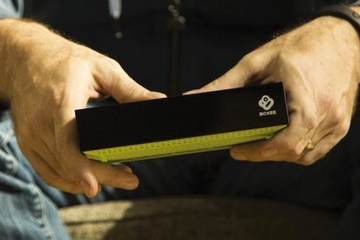
Boxee Lesson: You Can Neither Give Up Nor Count On the Cloud

[TechNewsDaily – via NBC]
As much as consumers depend on the cloud, however, they can never depend on it 100 percent — as a long line of cloud disappointments, both past and very recent, has proved.
[Read the rest of Boxee Lesson: You Can Neither Give Up Nor Count On the Cloud]Experts Use Tech Gadgets to Explain the Nature of Time

[TechNewsDaily – via NBC]
Is time an illusion? Does time “pass”? And do people have free will, or just predetermined destiny?At the World Science Fair, four experts used gadget metaphors (and factoids) to explain the workings of time.
[Read the rest of Experts Use Tech Gadgets to Explain the Nature of Time]Drone Fleets Will Deliver Supplies to Those in Need
[TechNewsDaily – via NBC]
Delivery by drone could relieve road congestion in cities such as Los Angeles or New York, she said. But the impact would be bigger where roads are few and unreliable— places like Haiti and the Dominican Republic, where Matternet has been testing drone deliveries.
[Read the rest of Drone Fleets Will Deliver Supplies to Those in Need]